















About the Exhibition
Artisera
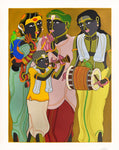
For over five decades, Paresh Hazra (born 1952) has built a deeply personal visual language that moves fluidly between mythology and modernity, memory and observation, ritual and routine. His paintings emerge from multiple inheritances at once: the storytelling traditions of rural Bengal, the performative energy of folk theatre, the discipline of European art education, and the evolving realities of contemporary life.
Born and raised in West Bengal during a time when Calcutta stood as one of India’s most important cultural centres, Paresh grew up surrounded by literature, theatre, music, and public performance. Folk drama and oral storytelling profoundly shaped his imagination, leaving a lasting influence on the theatrical compositions, symbolic figures, and narrative structures that continue to define his work today.
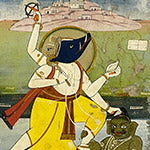
Paresh’s earliest encounters with mythology came through stories narrated by his grandmother — tales from the Ramayana and other epics that transformed gods, kings, and warriors into emotionally lived presences rather than distant religious icons. These stories continue to inhabit Paresh Hazra’s paintings, where mythology becomes less an act of illustration and more a philosophical language through which contemporary human experience can be understood.
While rooted in Indian visual traditions, Paresh’s work resists nostalgic revivalism or direct references to schools such as Kalighat painting. Instead, his practice attempts to create a bridge between the traditional and the contemporary. Alongside indigenous influences, his study of European art introduced him to compositional structure, material experimentation, and painterly discipline, allowing him to develop a visual language that feels simultaneously rooted and expansive.
This negotiation between tradition and reinvention is also visible in Paresh Hazra’s evolving relationship with medium and process. His earlier works in egg tempera — created using natural earth pigments painstakingly mixed by hand — carry a sense of stillness, precision, and luminosity. Tempera is an exacting and time-intensive process requiring immense patience, with each layer carefully built over time. Through this traditional medium, Paresh created works that feel timeless in both material and spirit.
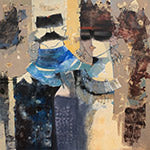
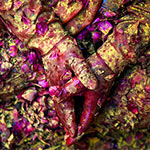
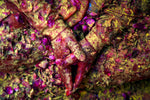
In contrast, his recent mixed-media and collage works embrace fragmentation, texture, spontaneity, and improvisation. The journey from tempera to collage reflects not only a shift in medium, but an artist’s continuous desire to reinvent his visual vocabulary while remaining deeply connected to enduring philosophical concerns. Torn surfaces, layered imagery, and gestural interventions create compositions that feel simultaneously ancient and contemporary — carrying traces of memory, theatre, erosion, and lived experience.
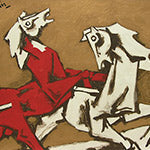
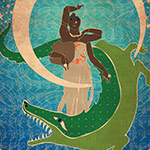
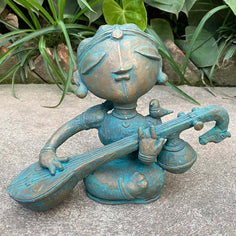
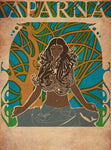
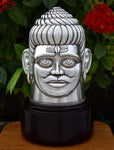
'Between the Sacred and the Everyday' comprises works across four distinct series – Theatre of the Sacred, Domestic Rhythms, Companions and Witnesses, and Fragments of Time. Whether depicting epic narratives, domestic interiors, symbolic figures, or contemporary anxieties, Paresh’s paintings remain deeply attentive to the emotional and spiritual conditions of human life. What distinguishes his practice is the constant balance between the premeditated and the spontaneous — between inherited forms and intuitive expression. Even after fifty years of uninterrupted practice, his work retains a sense of curiosity, experimentation, and renewal.
In Paresh Hazra’s world, the sacred is never distant from everyday existence. Mythology lives alongside ordinary routines; philosophy emerges through texture, gesture, colour, and storytelling. His paintings invite viewers into spaces where memory, theatre, ritual, and lived experience converge — reminding us that the timeless questions of humanity continue to unfold within the rhythms of daily life.
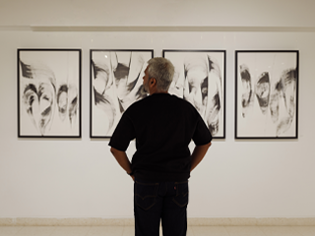
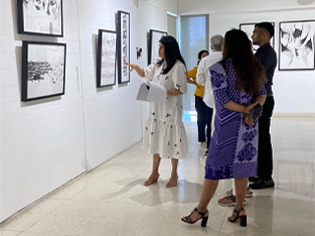
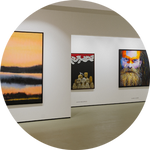
- Installation Views -


No products found in this collection.
- Artist Biography -

Artisera
Born in 1952 in Tamluk, West Bengal, Paresh Hazra is a senior contemporary visual artist whose practice spans over five decades. A graduate of the Government College of Art & Craft, Calcutta (First Class), he later completed a Postgraduate Diploma in Art Education (1980). Paresh Hazra’s highly distinctive visual language blends narrative figuration, symbolic motifs, and textured surfaces inspired by India’s cultural traditions. Over the years, he has experimented with various mediums, including egg tempera, gouache, and most recently, mixed media and collage work.
Since the early 1980s, Paresh Hazra has held more than 50 solo exhibitions across India, USA, Canada, United Kingdom, Hong Kong, and the Middle East, building an impressive international collector base. Notable collectors of his work include Bill Clinton, Steve Jobs, Toronto University (Canada), National Gallery of Modern Art (New Delhi), Lalit Kala Akademi (New Delhi), Ministry of Foreign Affairs (Govt. of India), Archaeological Museum of Karnataka, and Maruti Udyog (New Delhi).
Paresh’s works express stories of human relationships, community memory, and the quiet poetry of everyday life. Recognised for his masterful craft and storytelling through colours, Paresh’s paintings evoke a sense of warmth, nostalgia, and cultural identity.
The artist divides his time between Bangalore, India and the USA, continuing to create and exhibit actively.