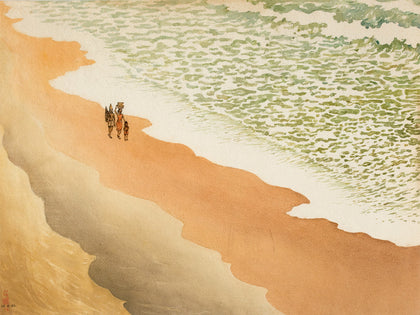
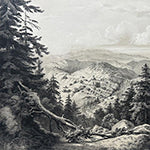



Crossing the Ganga, Jiaganj

by Indra Dugar
Price on Inquiry
This artwork is accompanied by an Authenticity Certificate.

All orders are insured for transit.

We ship worldwide.

Details

Medium: Watercolour on Japanese Paper
Size: 13 x 9 inches
Year: 1985
Signature: Lower Left in Bengali
  • ABOUT Indra Dugar

    Indra Dugar was born in 1918 in Jiaganj, West Bengal. Although he was the son of highly eminent artist Hirachand Dugar, Indra Dugar did not have any formal education in art. Instead, he learnt artistic techniques and practices from his father. During his schooling days in Santiniketan, he soaked in the ambience of Kala Bhavan, and was influenced by the Neo-Bengal School of Art. He considered Nandalal Bose a huge inspiration.

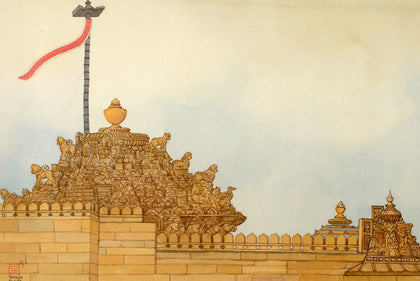
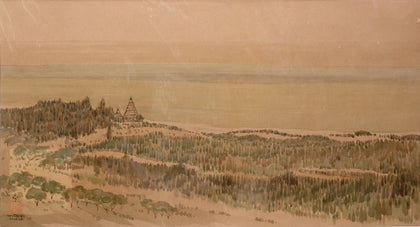
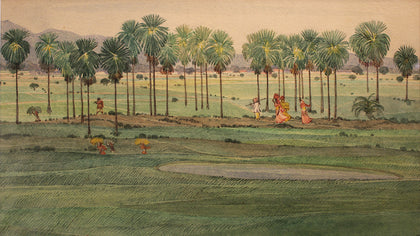
    Due to the absence of academic training, Indra Dugar developed a distinct style of his own, which differentiated him from other artists at Kala Bhavan, Santiniketan. Quickly outgrowing the mannerisms of the Bengal School, he took to painting natural landscapes and architectural forms on the spot, when he visited them. A harmony of colours always existed in his works, even when he did not intricately show every detail of the scene or surroundings he painted. Indra Dugar also created several decorative motifs for Congress annual sessions in different cities, and worked as a children’s book illustrator. Also a writer, he wrote for reputed publications such as Anand Bazar Patrika. Awarded by several institutions, Dugar was a member of the Academy of Fine Arts in Calcutta and All India Fine Arts & Crafts Society in New Delhi. Indra Dugar passed away in 1989.

    Read More
  • Returns

    We accept returns within 7 days of delivery if the item reaches you in damaged condition.
  • Shipping

    Shipping costs are extra, and will be calculated based on the shipping address.

    All orders are insured for transit.

    We ship worldwide.

    CARE INSTRUCTIONS

    Artworks should be displayed away from direct sunlight and breeze. To clean accumulated dust from a painting, use a soft, dry brush very lightly on the surface. Make sure there is no moisture on the bristles before touching the artwork. For repairing more severe damage, such as cracks or discolouration, it is best to seek help from a professional. Once a year, remove the artwork from the wall for a couple of days to let the wall breathe and avoid moisture accumulation.
    Read More

You May Also Like